
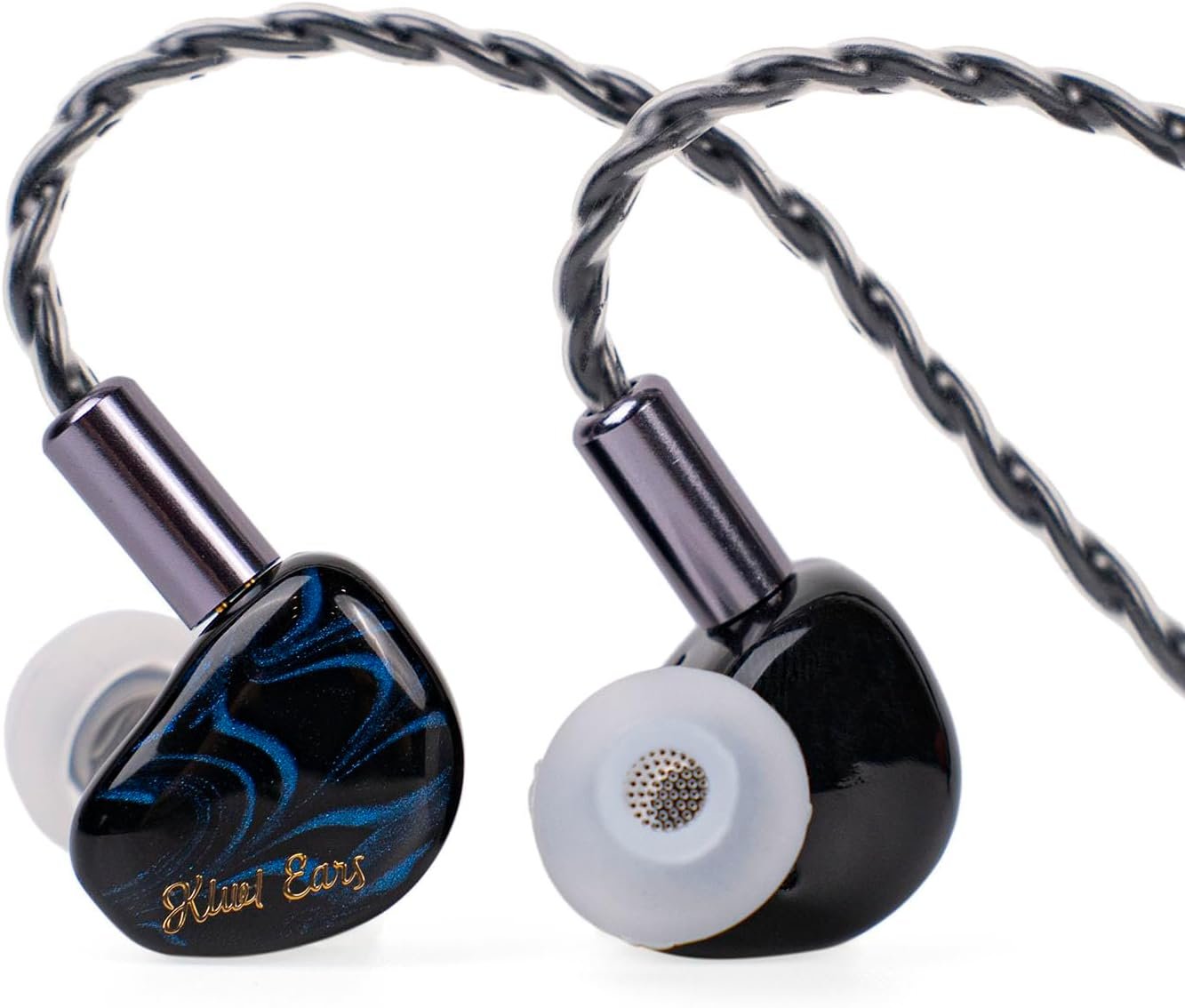


Linsoul Kiwi Ears Cadenza 10mm Beryllium Dynamic Driver IEMs, Blue
The Kiwi Ears Cadenza is an in-ear monitor built around a single 10mm beryllium dynamic driver, and it sits in a part of the market where tuning philosophy matters as much as the driver itself. Rather than chasing a heavily colored or novelty sound, the Cadenza is presented as an acoustically tuned IEM that aims for a balanced signature aligned with modern audiophile expectations. For listeners who want a wired, detachable-cable earphone with a specific tuning character, the Cadenza is a straightforward proposition: one dynamic driver, a 3D-printed housing designed around it, and a cable system that can be swapped or replaced.
Design and Build Approach
Kiwi Ears describes the Cadenza as using a custom-designed housing structure that is 3D printed to fit the 10mm beryllium driver. That detail matters because the housing is not a generic shell repurposed for the driver; the enclosure is described as being shaped around the driver itself. In practical terms, that suggests the internal volume and mounting are intended to work with the driver’s behavior rather than simply hold it in place.
The Cadenza is offered here in a blue finish, and it uses a 2-pin connector system. The connector is a 0.78mm 2-pin type, which is one of the more common detachable interfaces in the IEM space. The included cable is a 4-core braided copper cable terminated in a 3.5mm single-ended plug. That termination is the standard headphone connection found on most smartphones, computers, and audio devices, so the Cadenza can be used with typical consumer gear without an adapter.
The detachable design is worth noting for a practical reason: it allows the user to change cables and to replace the cable if it is damaged, which extends the usable life of the earphones beyond the cable itself. Kiwi Ears also positions the detachable system as a way to customize IEM-and-cable combinations, which is a common pursuit among listeners who like to experiment with different cable materials or terminations.
Driver Technology and Tuning
The centerpiece of the Cadenza is its 10mm beryllium dynamic driver. Beryllium is described in the product information as having the greatest tensile strength and surface tension among materials used in the audio industry, and Kiwi Ears states that this produces a sound often characterized by powerful and responsive bass impact, rich mids, and clear trebles. The company also notes that beryllium diaphragm drivers are still considered a high point among dynamic drivers used in speakers, headphones, and earphones.
The explanation offered for why this matters is mechanical. A dynamic driver’s diaphragm is the moving membrane that produces sound when driven by magnets inside the driver. Thinner, lighter, and stiffer membranes are described as being able to respond faster, which the company links to higher audio resolution and clarity across the frequency range. That is the stated rationale behind using a beryllium diaphragm rather than a more conventional material.
Tuning is where the Cadenza’s character is most clearly defined. Kiwi Ears says the Cadenza has been acoustically tuned to produce a balanced sound signature characteristic of modern audiophile standards. The bass is described as retaining the defining character of beryllium drivers, with impact force and attack speed, but with a quicker bass decay. That quicker decay is presented as the reason the mids can remain natural and free of muddiness or bloat. In other words, the low end is intended to hit with authority without lingering long enough to cloud the midrange.
The mids themselves are described as rich, lush, and detailed, with the speed of the beryllium driver credited for that detail. The treble is said to reflect a Harman-reference standard style, with a natural curvature that sounds natural and free of fatigue while still carrying micro-details and a sense of air. Taken together, these descriptions point to a tuning that aims for balance rather than a boosted, aggressive, or overly warm presentation.
Specifications and Compatibility
The Cadenza is listed with a sensitivity of 110dB SPL/mW at 1kHz and an impedance of 32Ω at 1kHz. Those figures describe an earphone that is not unusually difficult to drive, and the 3.5mm single-ended termination means it connects directly to the headphone outputs found on most smartphones, computers, and audio devices. The product information does not specify a microphone option for this configuration, and the comparison data lists the Cadenza as a without-mic model.
The 2-pin 0.78mm connector is the interface to keep in mind if you plan to swap cables. It is a widely used standard, so replacement or upgrade cables with a matching 2-pin termination are the relevant category to look for. The stock cable is a 4-core braided copper design with a 3.5mm plug.
Everyday Experience
Because the Cadenza is a wired IEM with a 3.5mm plug, it does not depend on Bluetooth pairing, charging, or a battery. That makes it a plug-and-play option for devices with a standard headphone jack. The detachable cable adds a layer of flexibility that fixed-cable earphones do not offer: if the cable is damaged, it can be replaced rather than rendering the earphones unusable.
The tuning description suggests the Cadenza is aimed at listeners who want a balanced presentation rather than a heavily bass-forward or sharply bright one. The stated goal of quick bass decay and uncluttered mids is relevant for genres where vocals and instruments need to sit clearly above the low end. The treble is described as non-fatiguing, which is a meaningful characteristic for longer listening sessions, though that is a stated tuning intent rather than a measured outcome.
One point worth being clear about: the product information describes the Cadenza’s sound in specific terms, but those are the manufacturer’s characterizations. They indicate the intended tuning direction, not an independently verified result.
Who Is This Product Best For?
The Cadenza is a reasonable fit for listeners who want a wired in-ear monitor with a detachable 2-pin cable and a 3.5mm termination that works with common phones, computers, and audio devices. It also suits anyone interested in a single dynamic driver design built around a beryllium diaphragm, since that is the core of the product’s identity.
Because the cable is detachable and uses the 0.78mm 2-pin standard, it is also relevant for people who like to swap cables or who want the option of replacing a worn cable later. And for those who prefer a balanced tuning over a strongly colored one, the Cadenza’s stated acoustic goals line up with that preference.
It is less obviously aimed at listeners who specifically want a wireless earphone, a model with a microphone, or a multi-driver hybrid setup. The supplied information describes the Cadenza as a single 10mm beryllium dynamic driver model without a mic, so those needs point elsewhere in the lineup.
Final Verdict
The Kiwi Ears Cadenza is a focused product: a single 10mm beryllium dynamic driver, a 3D-printed housing designed around that driver, a balanced tuning described in terms of quick bass decay, natural mids, and a Harman-reference-style treble, and a detachable 0.78mm 2-pin cable with a 3.5mm termination. Its 32Ω impedance and 110dB sensitivity are the kind of figures that pair sensibly with everyday devices that have a headphone jack.
The appeal here is coherence. Kiwi Ears has built the Cadenza around one driver and a specific tuning philosophy rather than around a long feature list, and the detachable cable adds a practical dimension that fixed-cable earphones lack. For a listener who wants a wired IEM with a balanced character and the option to change cables, the Cadenza is a well-defined option to consider. The sound descriptions are the manufacturer’s own, so the most reliable way to judge whether the tuning matches your taste is to weigh those stated characteristics against what you already know you enjoy.