


Linsoul Kiwi Ears x B_Media Terras IEM Cable Review
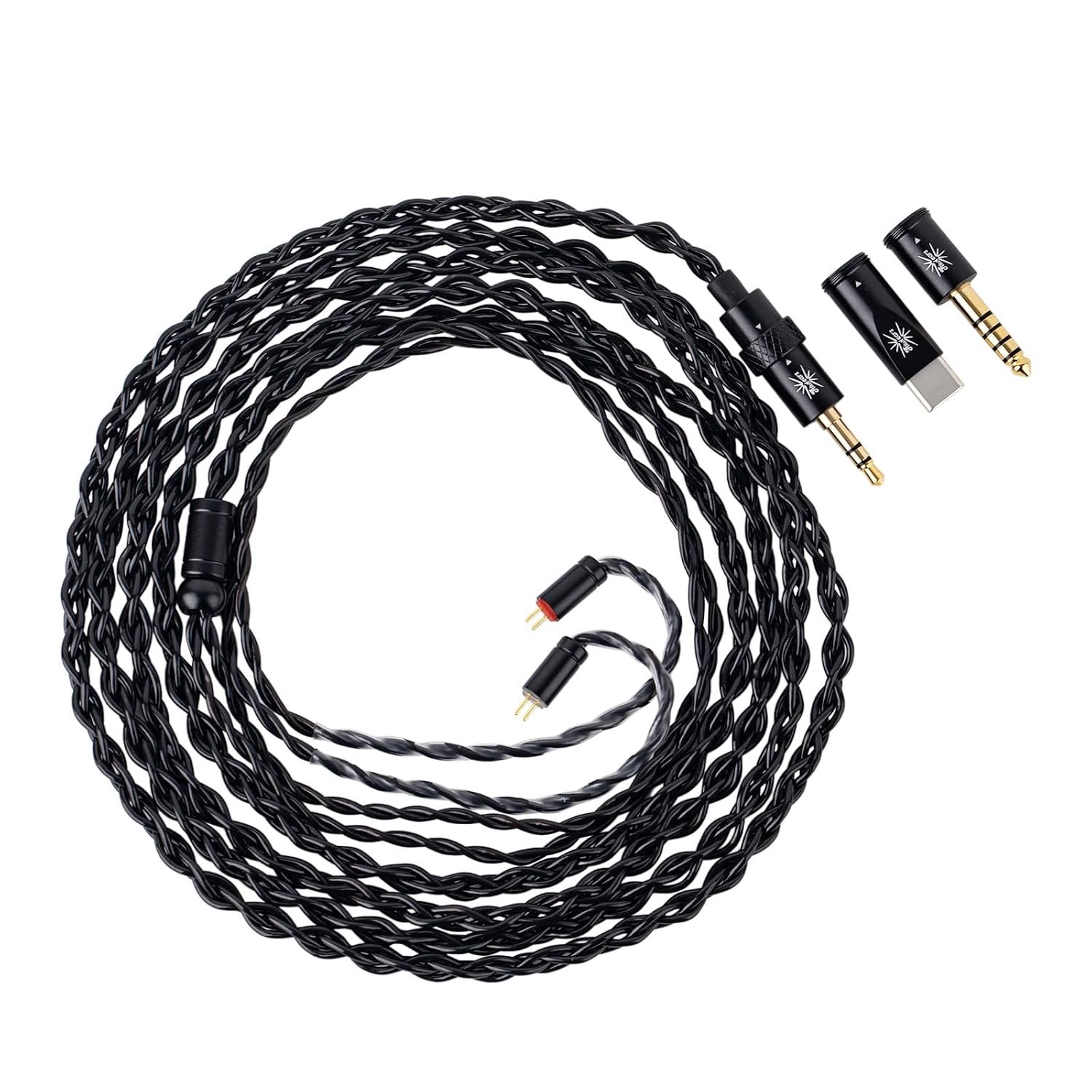
Replacing the cable on an in-ear monitor is one of the simplest ways to change how a setup behaves day to day, and the Linsoul Kiwi Ears x B_Media Terras IEM Cable approaches that job with a modular design rather than a single fixed plug. Developed as a collaboration between Kiwi Ears and Axel Bostrom of B_Media, the Terras is built for compatible 0.78mm 2-pin IEMs and ships with three interchangeable source modules: a 3.5mm single-ended plug, a 4.4mm balanced plug, and a USB Type-C DAC module. That combination is the core idea behind the cable — one cable that can move between different sources instead of forcing you to carry separate cables or an extra USB-C dongle.
Design and Build Quality
The Terras is a four-core cable using four 32AWG conductors made from 4N single-crystal copper. The conductors are arranged in a Litz-type braided structure, which the manufacturer states helps limit interference while retaining the flexibility needed for everyday IEM use. That construction detail matters less as a headline number and more as context for how the cable is put together: four cores, a braided layout, and copper conductors rather than a plain two-wire design.
Handling is a stated focus of the design. The sheath is fiber-reinforced and described as flexible, allowing the cable to follow natural movement with less stiffness and memory. The manufacturer also notes a light feel, reduced handling noise, and tangle-resistant behavior. These are characteristics the source attributes to the cable rather than measured results, but they point to a cable intended to stay manageable during commutes, travel, and longer listening sessions rather than stiffening up or coiling awkwardly.
The modular hardware is where the design gets more interesting. Each plug module attaches through threaded locking collars, which are intended to keep the selected module firmly attached during daily use. The metal hardware is described as durable and as adding a reassuring connection at each swap point. The practical upshot is that you can change sources without replacing the whole cable — the module unscrews, another one goes on, and the cable itself stays in place.
Features and Connectivity
The three included modules cover the most common ways people connect IEMs. The 3.5mm single-ended module suits standard headphone outputs, the 4.4mm balanced module suits balanced outputs on compatible players and amplifiers, and the USB Type-C module carries its own DAC so the cable can connect directly to compatible phones and computers. The manufacturer frames this as a way to move between phones, computers, DAPs, and headphone amps with a single cable.
One limitation is stated plainly: the USB Type-C module does not offer app-based EQ or user-customizable tuning. It is a connectivity option, not a tuning tool. Buyers who expect software adjustment from a USB-C cable should note that this one does not provide it.
Connector orientation is handled with color coding. The red pin goes to the right channel and the blue pin to the left. The manufacturer suggests verifying channel orientation with a test track or an online channel test after inserting the pins, and swapping the cables if the sound is reversed. That is a useful detail for anyone new to 2-pin connectors, where it is not always obvious which pin belongs on which side.
Compatibility
The Terras uses a regular 0.78mm 2-pin connector and is designed for physically compatible IEMs. The listed compatible models span several brands. From Kiwi Ears, the list includes Cadenza II, Astral, Orchestra Lite, Quartet, Quintet, KE4, Melody, Forteza, Canta, and Septet. From ZiiGaat, it covers Lush, Luna, Arcanis, Doscinco, Arete, Estrella, Odyssey, Arcadia, and Cincotres. SIMGOT models include Supermix4, EW300, SuperMix5, EA1000, and EW200. The 7Hz list covers Timeless 2, Salnotes Zero, Zero:2, Diablo, Divine, and G1. TANGZU models include XuanNv, FUDU Verse 1, and Wu Heyday, while THIEAUDIO coverage includes Hype2, Hype4, and Hype10.
Other brands are also represented: Aria, Aria SE, KATO, Stellaris, and Blessing2; Hexa, Hola, Zero, and Nova; and INK, INK MK2, Qinglong, and Xuanwu. The manufacturer is careful to note that fit depends on both pin spacing and socket design, so connector clearance should be checked before purchase. KZ earphones with recessed sockets may not be compatible. That caveat is worth taking seriously — a 0.78mm 2-pin label does not guarantee a match across every housing design.
On the source side, the cable does not connect directly to an iPhone. The manufacturer states that no IEM cable connects directly to an iPhone and that an Apple dongle or adapter is required, recommending the Linsoul DD HiFi TC35i as one option among several IEM adapters for iPhone, iPad, and iPod.
Length Options and Everyday Use
The Terras comes in two lengths. The 1.25m version is positioned for portable listening, commuting, and travel, while the 2m version is aimed at desktop systems, relaxed seating, and extra reach between IEMs and source. Both lengths include all three modules — the 3.5mm, 4.4mm, and USB-C DAC plugs — so the choice is about reach rather than connectivity.
Length is measured with the cable fully extended from either 0.78mm 2-pin connector to the end of the installed source plug. A tolerance of roughly ±3cm may occur because of manual measurement and cable flexibility, and the manufacturer notes this does not affect normal use. If you are working close to an exact length requirement, that margin is worth keeping in mind.
Who Is This Cable Best For?
The Terras makes the most sense for someone who already owns one of the compatible 0.78mm 2-pin IEMs and wants to move between a phone, a computer, a DAP, and a headphone amp without juggling multiple cables. The modular plug system is the reason to choose it over a fixed-termination cable, and the USB-C DAC module is what makes direct phone and computer connection possible.
It also suits listeners who prefer a lighter, more flexible cable for commuting and travel, based on the manufacturer’s description of the sheath and handling behavior. Desktop users who need extra reach may prefer the 2m version, while portable users will likely find the 1.25m length more practical.
It is less suited to anyone using KZ earphones with recessed sockets, or to IEMs whose socket design does not provide the necessary connector clearance. Buyers expecting app-based EQ from the USB-C module should also look elsewhere, since that feature is explicitly not offered.
Final Verdict
The Linsoul Kiwi Ears x B_Media Terras IEM Cable is a modular replacement cable built around flexibility of use rather than a single fixed plug. Its three source modules, threaded locking collars, 4N single-crystal copper conductors, and Litz-type four-core construction give it a clear identity among 0.78mm 2-pin cables. The stated handling characteristics — flexible sheath, light feel, reduced handling noise, and tangle resistance — support the everyday-use positioning, while the two length options let buyers match the cable to portable or desktop setups.
The main considerations are compatibility and expectations. Fit depends on pin spacing and socket design, so checking clearance against your specific IEM is essential, and KZ models with recessed sockets may not work. The USB-C module provides connectivity but not EQ or customizable tuning, and iPhone users will need a separate adapter. For anyone with a compatible IEM who wants one cable to cover 3.5mm, 4.4mm balanced, and USB-C sources, the Terras is a thoughtfully structured option worth evaluating against those requirements.